
Clinicians
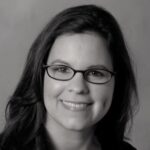
Maria Gonzalez, LMHC
Pronouns
She / her / hers/ Ella
How I Think About the Therapy Process
I see therapy as a collaborative process that honors the whole person — their pain, their wisdom, and their capacity for growth and liberation. I believe healing is not a linear or individual journey — it is shaped by culture, community, lived experience, and systemic realities.
How I think about the therapy process is deeply rooted in a commitment to decolonized practices, multicultural responsiveness, trauma-informed care, and feminist values. I believe that healing does not happen in isolation — it is connected to the histories, identities, and systems that shape our lives. Therapy, for me, is not about “fixing” individuals, but about creating space for people to reconnect with their strengths, reclaim their stories, and navigate the impacts of oppression, trauma, and marginalization. I honor the knowledge and resilience that clients bring, recognizing that each person’s cultural, spiritual, and ancestral roots are vital to the healing process. A decolonized approach means questioning dominant narratives, centering cultural knowledge, and acknowledging the ongoing effects of historical and systemic harm, especially on BIPOC communities. Being trauma-informed means creating a space of safety, consent, and empowerment, always recognizing the ways trauma can show up in the body, mind, and spirit. Feminism reminds me to challenge power dynamics within the therapeutic relationship and beyond, to center voices that have been silenced, and to approach healing with care, intersectionality, and respect.
Who I Work Best With
I work primarily with adults (18+) who are navigating life transitions, health challenges, immigration, refugee, and asylum-seeking concerns, grief and loss, and relational concerns. I hold space for individuals experiencing work or career-related transitions and challenges, recognizing how deeply our professional lives intersect with our overall well-being. I also offer support for caregivers through a lens of compassion, cultural humility, and trauma-informed care, recognizing the immense labor they carry and the importance of creating space for their own healing, boundaries, and self-compassion.
I provide counseling to folx navigating immigration, refugee, and asylum-seeking concerns, recognizing the unique challenges and traumas that can accompany these experiences. My approach is trauma-informed, culturally responsive, and grounded in empathy, creating a safe space for individuals to process complex emotions related to displacement, loss, and identity. I honor the resilience and strength of those seeking safety and stability, and I am committed to supporting their healing and empowerment throughout their journey.
In my work with others, I strive to create a space that honors each person’s cultural identity, ancestral knowledge, and personal wisdom. A decolonized approach invites us to question dominant narratives and reconnect with ways of knowing and being that have been historically marginalized. I am intentional about practicing from a trauma-informed lens, creating safety, choice, and trust within the therapeutic relationship. I see therapy as a collaborative, relational process that helps adults reconnect with their strength, navigate life’s complexities, and move toward healing, self-acceptance, and liberation.
Specialty Training and Services
I am a licensed Clinical Mental Health Counselor and earned my doctoral and master’s degree in Counseling from University of Missouri-St. Louis. I have over 20 years of community counseling, which includes school mental health support. I am certified to provided immigration evaluations. I also provide clinical supervision, professional mentorship and life coaching. I am part of Physicians for Human Rights, currently serve as a board member for the American Counseling Association (ACA), and served as the past-president of the ACA of Washington state.
Who I am Outside of Work
I was born in Puerto Rico, and raised in the states. I identify as being bicultural which is a profound gift that offers both personal and collective strengths. On a personal level, it provides me a broader worldview and the ability to see life through multiple cultural lenses, fostering empathy, open-mindedness, and resilience. This richness of identity often fuels my creativity and deepens my connection to heritage, traditions, and ancestral knowledge. Collectively, I often serve as bridge builders between communities, fostering understanding, and inclusion. The ability to hold and honor more than one cultural world at the same time not only strengthens individuals but enriches families, communities, and society as a whole. Being bicultural means carrying both roots and wings — grounded in history, yet equipped to navigate the complexities of a diverse and evolving world.
I have lived in several states throughout my life but I have made Washington my home for the last 13 years. What I love about Washington State is not only its stunning natural beauty but also its deep, living connection to Indigenous communities and history. The forests, mountains, and waters here carry stories that long predate statehood. From the lush forests and snow-capped mountains to the rugged coastline and winding rivers, Washington offers endless opportunities to pause, reflect, and feel grounded. I also appreciate the vibrant artistic community in the Pacific Northwest. I enjoy visiting art museums, listening to live music, and recently, I’ve found peace and joy in reconnecting with playing a few musical instruments. Most importantly, I value the time I spend with my family, my elders, dear friends, and my sweet fur baby — a chihuahua named Lily Marie.
Family means to me a foundation of love, connection, and belonging. It is not just defined by blood, but by the people who show up with care, support, and understanding. Family is where I find comfort, where I can be my full, authentic self, and where traditions, stories, and laughter are shared. It also means honoring my elders, carrying forward the values they’ve instilled, and making space for joy and healing. My family includes not only relatives but dear friends and chosen family who remind me that love, respect, and community are what truly make us whole. Of course, my sweet fur baby, Lily Marie, is part of that family, offering unconditional love and companionship every day. Family to me is both a responsibility and a gift — a constant reminder of the strength that comes from being connected to others.
Contact
Location: Telehealth Only in Washington State
Phone: (425) 800-0744 | Email: maria@spectrumpsychwa.com
Return to Clinicians
Spectrum Psychological Associates:
888 240-5967
Spectrum Psychiatric Associates:
425 252-8637
